
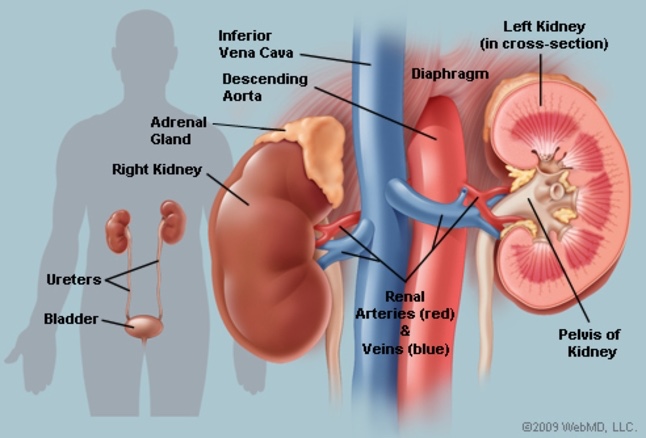
The Human body is an incredibly complex machine. Over the last 100 years or so we’ve made incredible advances in our understanding of human anatomy and physiology. But there is still so much left to learn about ourselves. A close friend of mine asked what particular role our kidneys play in blood pressure modulation. So, today we are going to take a glance at our kidneys and their function in maintaining blood pressure, or at least how they affect blood pressure.
https://images.app.goo.gl/9cSrMubPVrVXobX99
The liver produces a plasma protein called angiotensinogen. We will come back to angiotensinogen in a second. Our kidneys produce an enzyme called Renin. Renin is produced by a structure called the juxtaglomerular apparatus. Which is only a small portion of a much larger structure responsible for filtration of the blood.
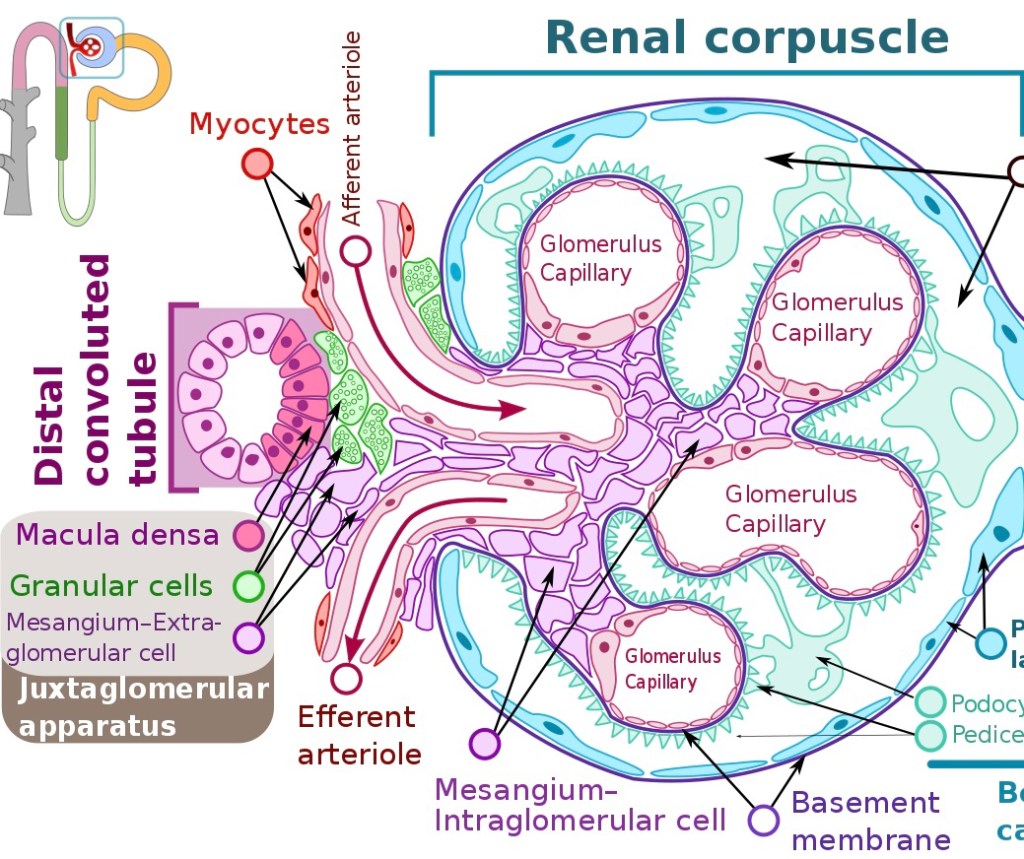
If the kidney senses a change in blood pressure or blood flow it will either increase renin production or decrease it. Renin (produced by the kidney) interacts with angiotensinogen (produced by the liver), converting it to angiotensin 1. Now for the lungs, yes the lungs also have a role in this system.

https://images.app.goo.gl/einw9rFxXePb8CBn6
The lungs produce an enzyme called angiotensin-converting enzyme or ACE for short. If this acronym looks familiar to you its probably because of medications referred to as ACE inhibitors. ACE inhibitors help control high blood pressure, I see them all the time in commercials. Doctors will prescribe this mediation in an attempt to keep your blood pressure stable. High blood pressure is a silent killer.
Angiotensin 1 gets converted into angiotensin 2 by interacting with ACE. Here we get to the meat of the bones, Angiotensin 2 not only acts directly on blood vessels, making them contract, but also stimulates the adrenal glands (they sit on top of the kidneys) to release aldosterone. Aldosterone stimulates the kidneys to reabsorb more sodium chloride (NaCl) and water (H2O), while also stimulating the constriction of arterioles (small arteries). Which causes an increase in blood pressure. This is why ACE inhibitors are so effective in controlling blood pressure.
This is only a simple explanation of how the kidneys can affect blood pressure. The entire process is much more complex but this was only meant to get your feet wet. I also provided a link Incase you want to know more about this system or would rather listen and have visual diagrams of the whole process.
https://www.sciencedirect.com/topics/neuroscience/angiotensinogen
 The Science Pigeon